
Artificial Grass Drainage and Base Prep for York Region Soil and Lot Conditions
Good artificial grass drainage and base prep are what separate a Vaughan lawn that stays flat and dry from one that ripples, puddles, and heaves after a couple of winters. The turf you see gets the attention, but the layers underneath do the real work, and York Region soil makes that groundwork more important than in many other places. Much of Vaughan sits on heavy clay that holds water, so the base has to move rainfall away fast and stand up to the freeze-thaw cycles of a local winter.
Why does drainage matter so much in York Region?
Because the native soil under most Vaughan yards does not drain well on its own. Clay-heavy ground sheds water slowly, so without an engineered base the rain has nowhere to go and sits under the turf. That trapped water breeds odour, softens the surface, and freezes in winter, which lifts and warps the lawn. A well-built aggregate base solves this by giving water a fast path down and away before it can pool.
What soil is under Vaughan yards?
It varies across the city, and that changes the base plan. Direct answer: most of central and southern Vaughan, including Woodbridge, Maple, and Concord, sits on clay-rich glacial till that drains slowly, while parts of the north near Kleinburg and the Oak Ridges Moraine have sandier, faster-draining ground. Low areas near Humber River tributaries can also hold a higher water table. A crew that checks your specific lot rather than assuming a standard depth will build the base your soil actually needs.
How a proper turf base is built
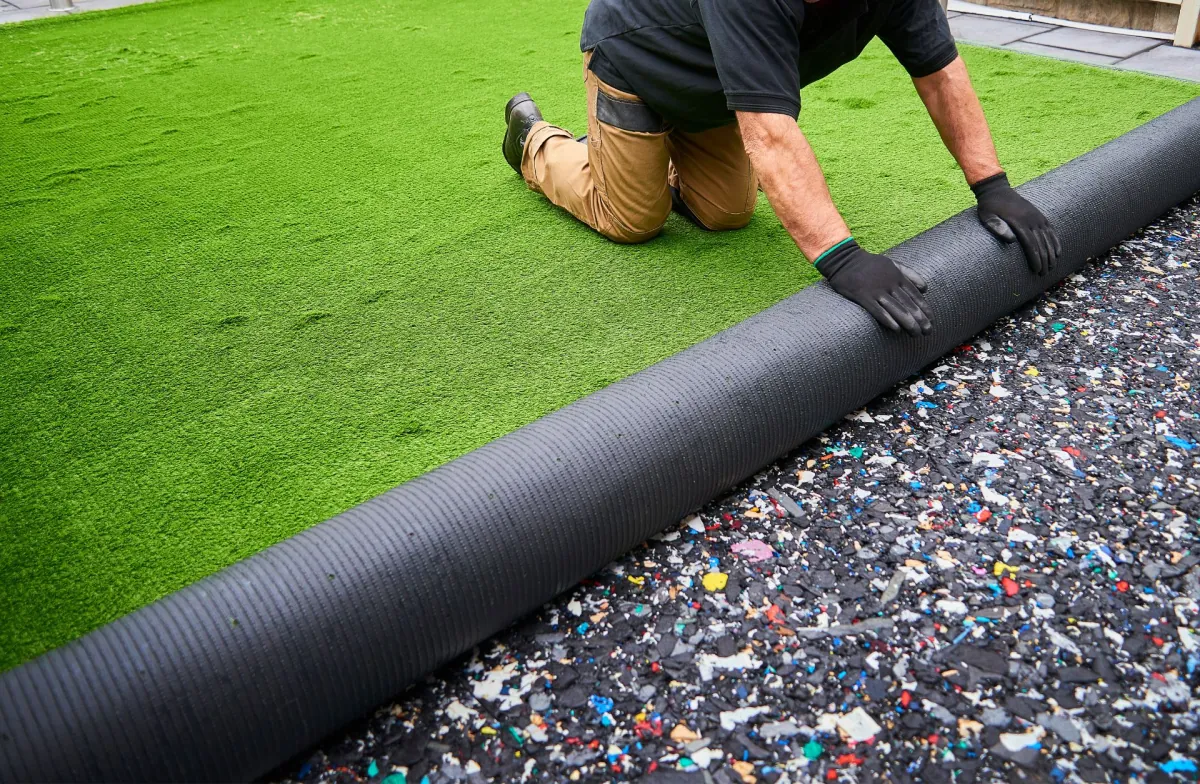
A sound base follows a clear sequence. The steps look simple but the details decide how the lawn performs:
- Excavate the existing sod and topsoil, usually 75 to 100 mm deep, more if the ground is soft or poorly graded.
- Lay a geotextile fabric to separate the clay below from the stone above so the two do not mix over time.
- Add crushed stone in lifts, typically a granular base topped with a finer angular layer, and compact each lift with a plate tamper.
- Laser or string grade the surface to a gentle slope, around 1 to 2 percent, so water runs toward a low edge or drain.
- Lay, seam, fasten, and infill the turf once the base is firm and true.
Compaction is the step budget installs skip, and it is the one that keeps the lawn from settling into low spots. If you are comparing bids, our guide on how to choose a good turf supplier lists the base questions to ask.
Drainage details for problem lots
Some Vaughan yards need more than a standard base. On a flat clay lot, a walkout with poor grade, or a spot that already collects water, an installer may add a French drain, a perforated pipe under the base, or a fully permeable stone section that lets water fall straight through. Downspouts should be directed away from the turf rather than dumping onto it. The right combination depends on where the water wants to go, which is why the the Artificial Grass Vaughan crew maps drainage during the free on-site visit.
Freeze-thaw and winter heave
Vaughan winters swing above and below freezing many times, and each cycle can lift poorly built ground. An open-graded, well-compacted stone base resists this because it drains before water can freeze and expand under the surface. Native clay, by contrast, holds moisture that freezes and pushes the lawn up, then leaves a dip when it thaws. This is the main reason the base cannot be an afterthought here, and why proper base work protects the 15 to 20 year lifespan the turf is built for.
Signs of a base that was built the cheap way
A failing base usually shows itself within a season or two:
- Water pools on the surface and takes a long time to clear after rain.
- Low spots or ripples appear where the ground settled unevenly.
- The lawn feels spongy or shifts underfoot.
- Seams lift or the edge pulls away from the border.
Most of these trace back to thin stone, skipped compaction, or grading that ignored where the water needed to go. For how base quality ties into long-term value, see our guide on how long backyard artificial grass lasts.
Keeping drainage working over time
A well-built base drains for years, but a little upkeep keeps it that way. Clearing leaves and debris off the surface stops the top of the turf from clogging, and rinsing pet areas keeps the infill from packing down and slowing the flow. If water ever starts to sit where it used to clear quickly, that is worth a look before a small issue turns into a low spot. On a properly compacted Vaughan base, though, drainage problems after install are rare.
FAQs
Does artificial grass drain well on Vaughan clay soil?
The turf itself drains through its backing, but on clay soil the base underneath has to carry the water away. A compacted crushed stone base graded to a slight slope is what makes drainage work over heavy York Region ground.
How deep should the base be for turf in Vaughan?
Most residential installs excavate 75 to 100 mm and rebuild with compacted crushed stone, going deeper where the soil is soft or the lot drains poorly. The right depth depends on your specific yard, not a one-size number.
Will freeze-thaw ruin my artificial grass?
Not if the base is built for it. An open-graded, well-compacted base drains before water can freeze and heave, which is what keeps the lawn level through Vaughan winters.